Grid
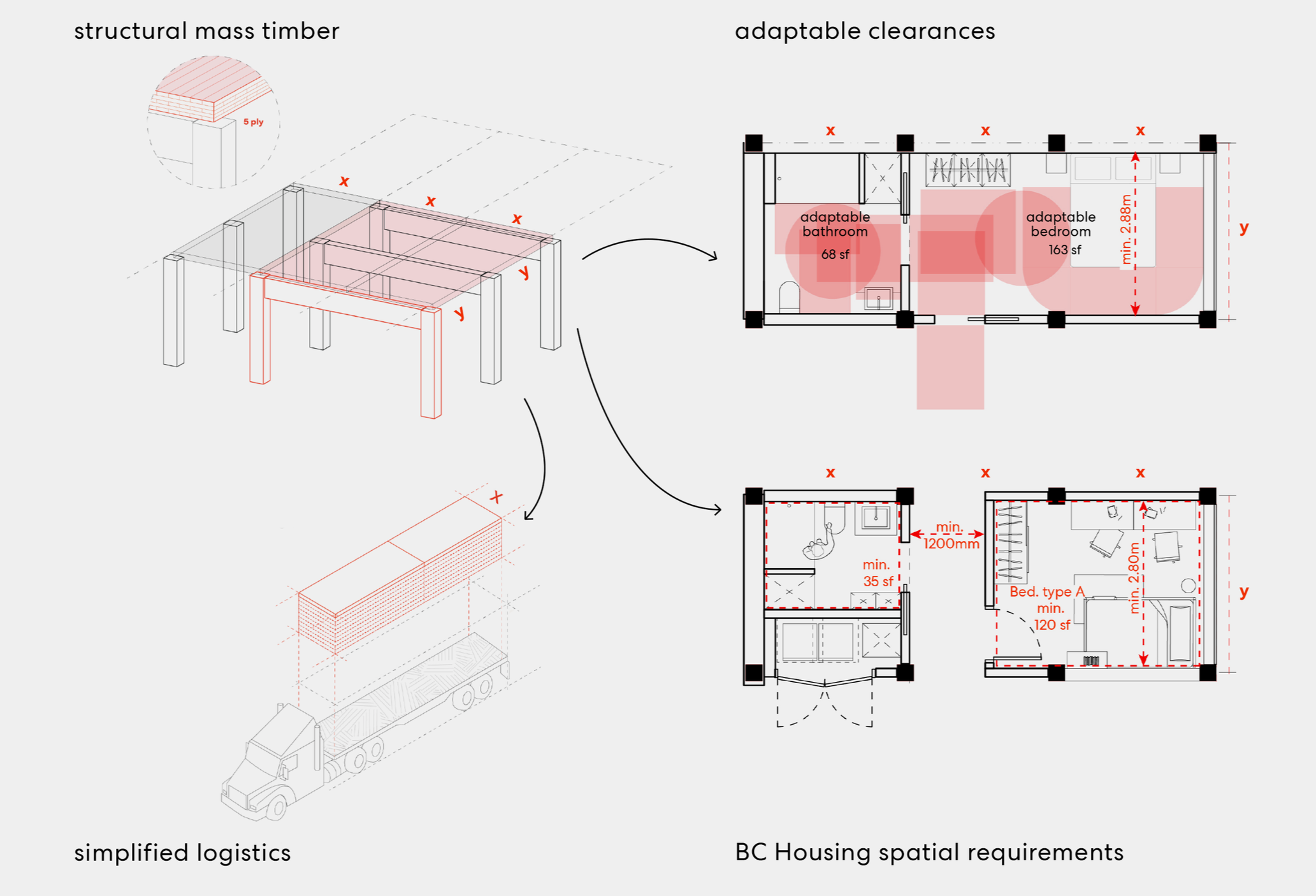
The modular timber housing system is organized around a carefully calibrated dimensional grid.
Rather than serving formal or stylistic goals, the grid rationalizes regulatory requirements, livability standards, structural spans, fabrication limits, and transportation constraints into a single coordinating framework.
From constraints to coordination: a shared dimensional language
Housing projects must satisfy overlapping demands: code, accessibility, livability, efficiency, cost, and constructability. The grid provides a universal solution.
Why Start Here?
Rationale
Consistency without rigidity
The grid enables repeatability while still allowing variation in unit mix, building form, and site response.
Design acceleration
By embedding constraints early, the grid reduces late-stage redesign, coordination conflicts, and bespoke detailing.
Adaptability As Design Driver
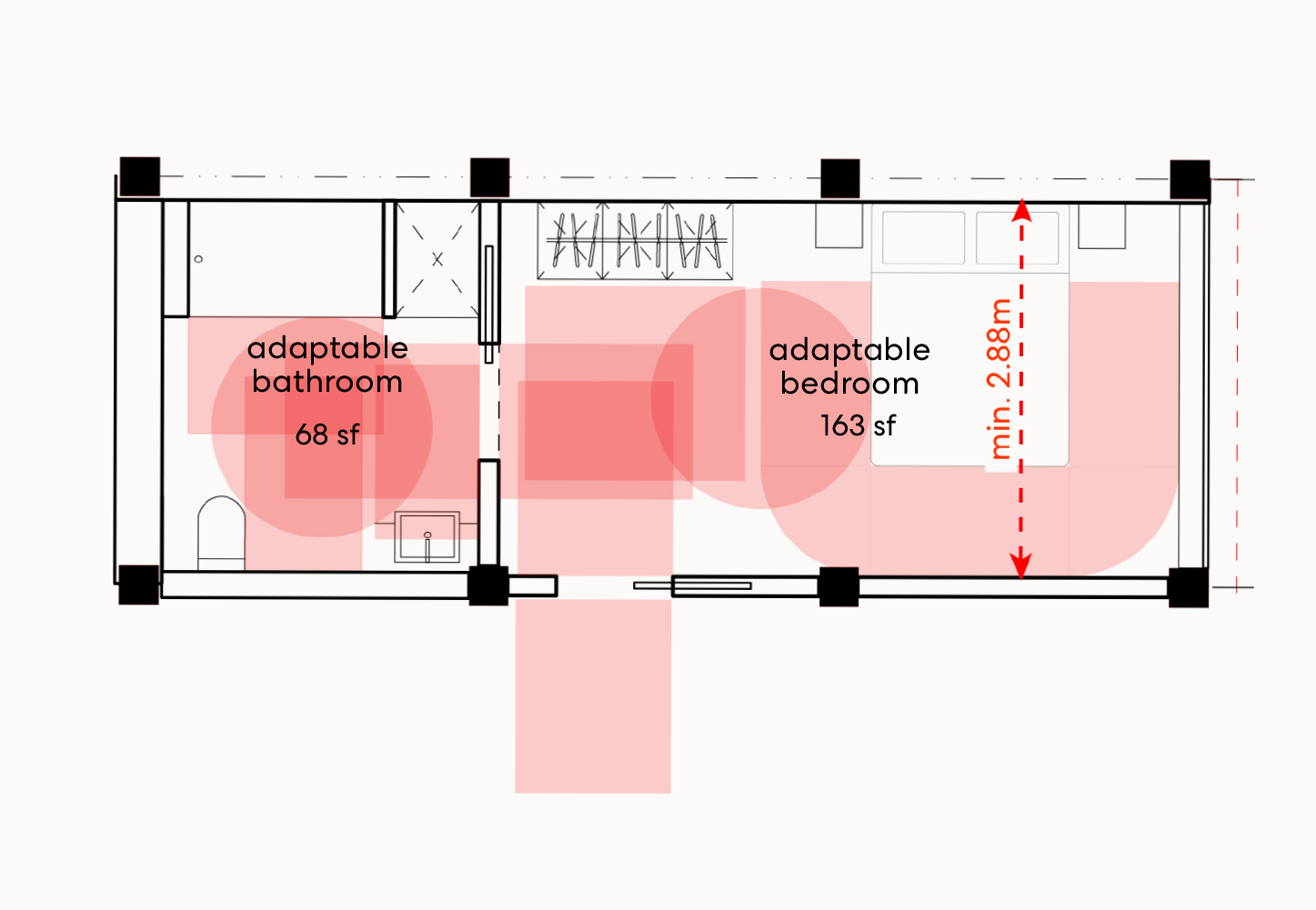
Adaptable dwelling requirements actively inform the grid instead of being treated as constraints to be addressed with bespoke solutions.
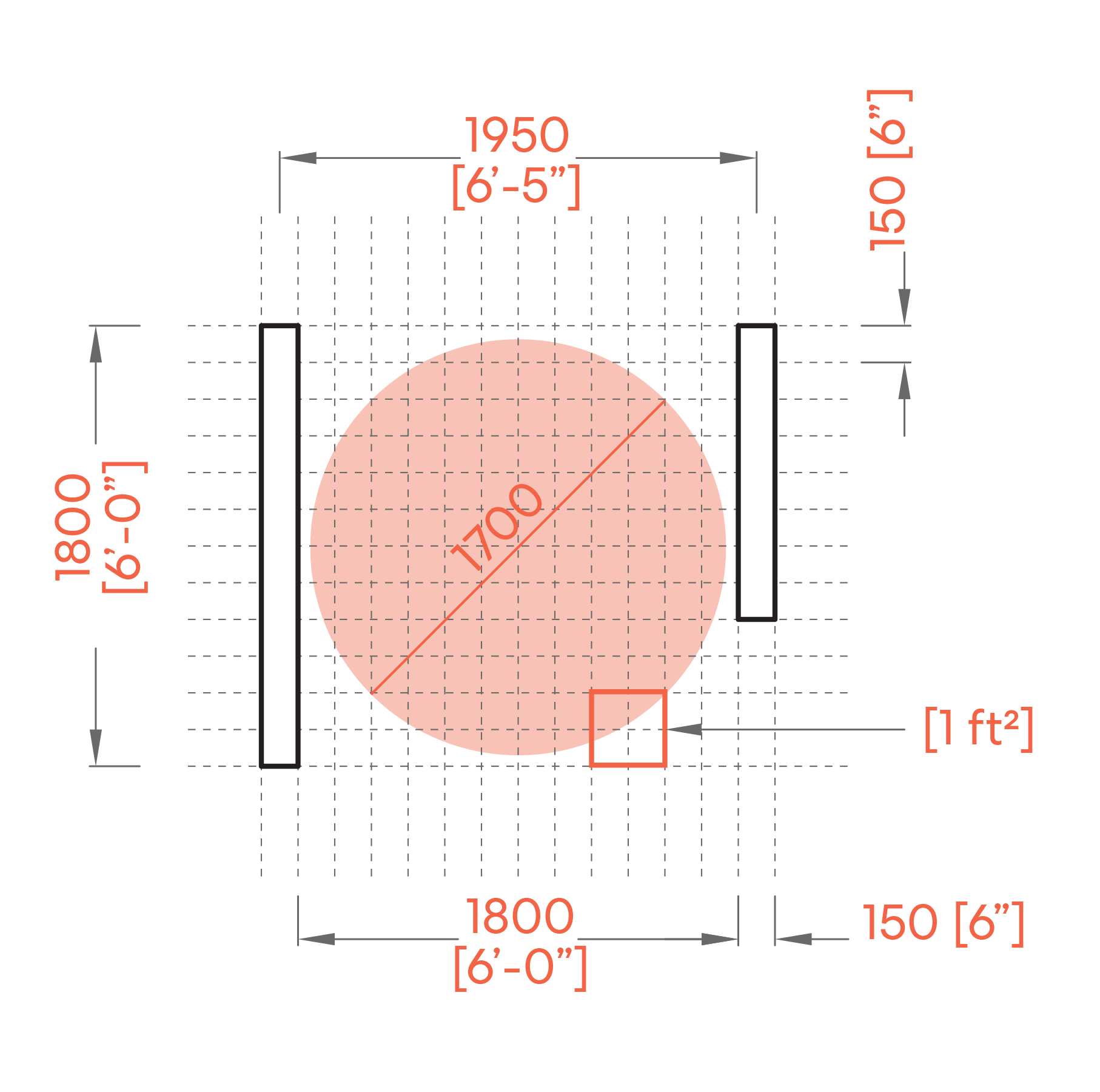
The adaptable bedroom and bathroom block—including a 1,700 mm turning radius and required clearances—establishes the minimum bay width of the system. By embedding adaptability into the base grid, all unit types remain compliant without requiring bespoke planning solutions.
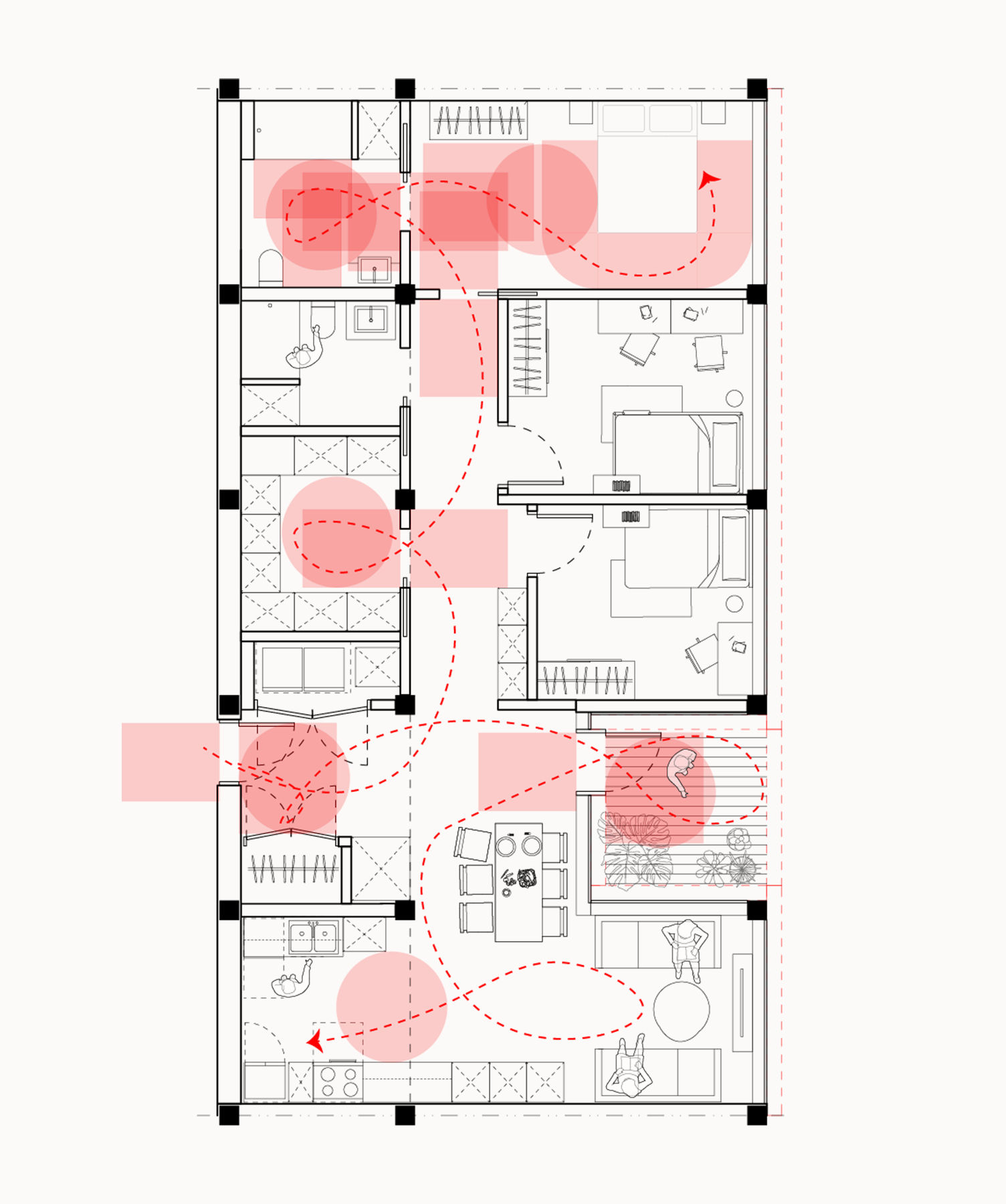
This approach allows accessible circulation, dignified movement, and future adaptability to be achieved without sacrificing area efficiency.
Base Module
At the core of the system is a 150 mm (6”) base module, selected to reconcile metric design standards with imperial construction conventions.
Metric units are used for architectural grids, structure, and clearances, while imperial units remain legible for construction and real estate metrics.
This base module allows all critical dimensions—including structural spans, wall thicknesses, clearances, and service zones—to be expressed as whole-number multiples.
This dual compatibility avoids rounding errors, dimensional drift, and coordination conflicts across disciplines.
Standard Grid
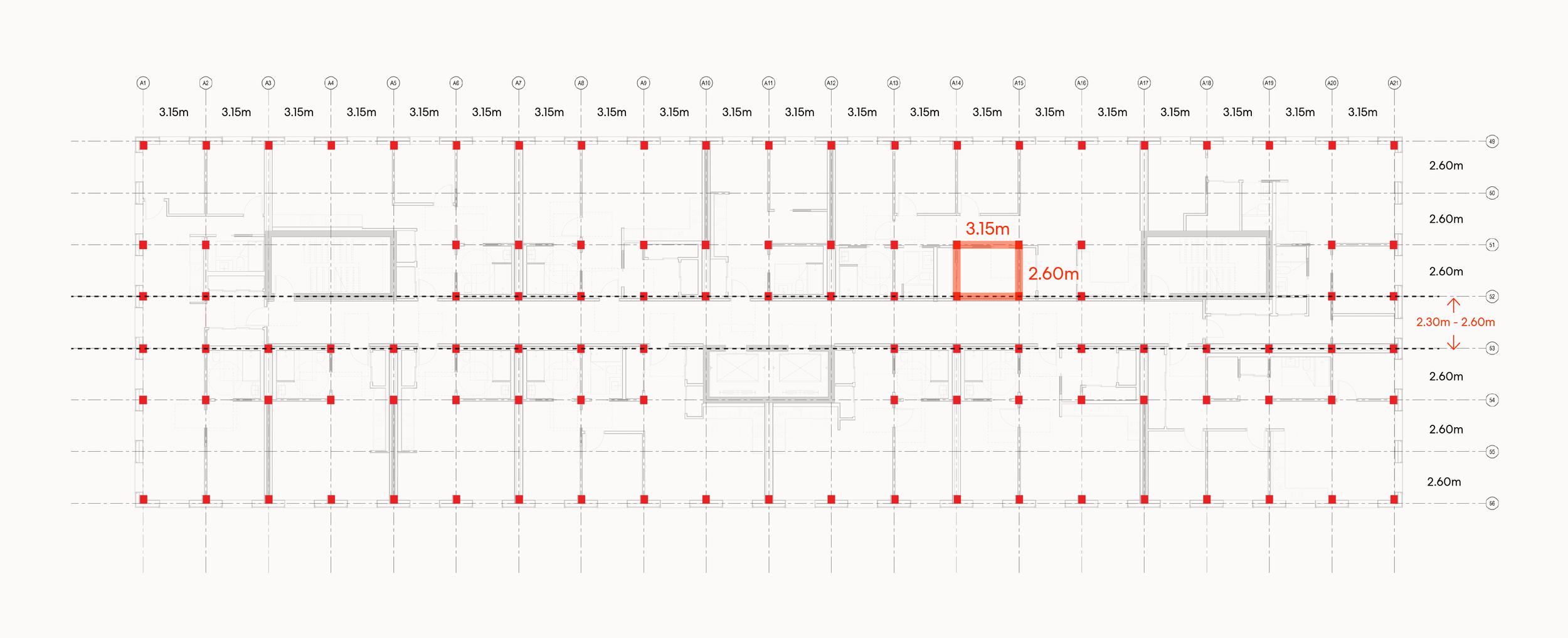
The base grid of the system has been rationalized to a standard 3.15m bay with CLT floor panels spanning 2.60m.
This supports both manufacturing capability and a livable spatial module.
One system, many buildings.
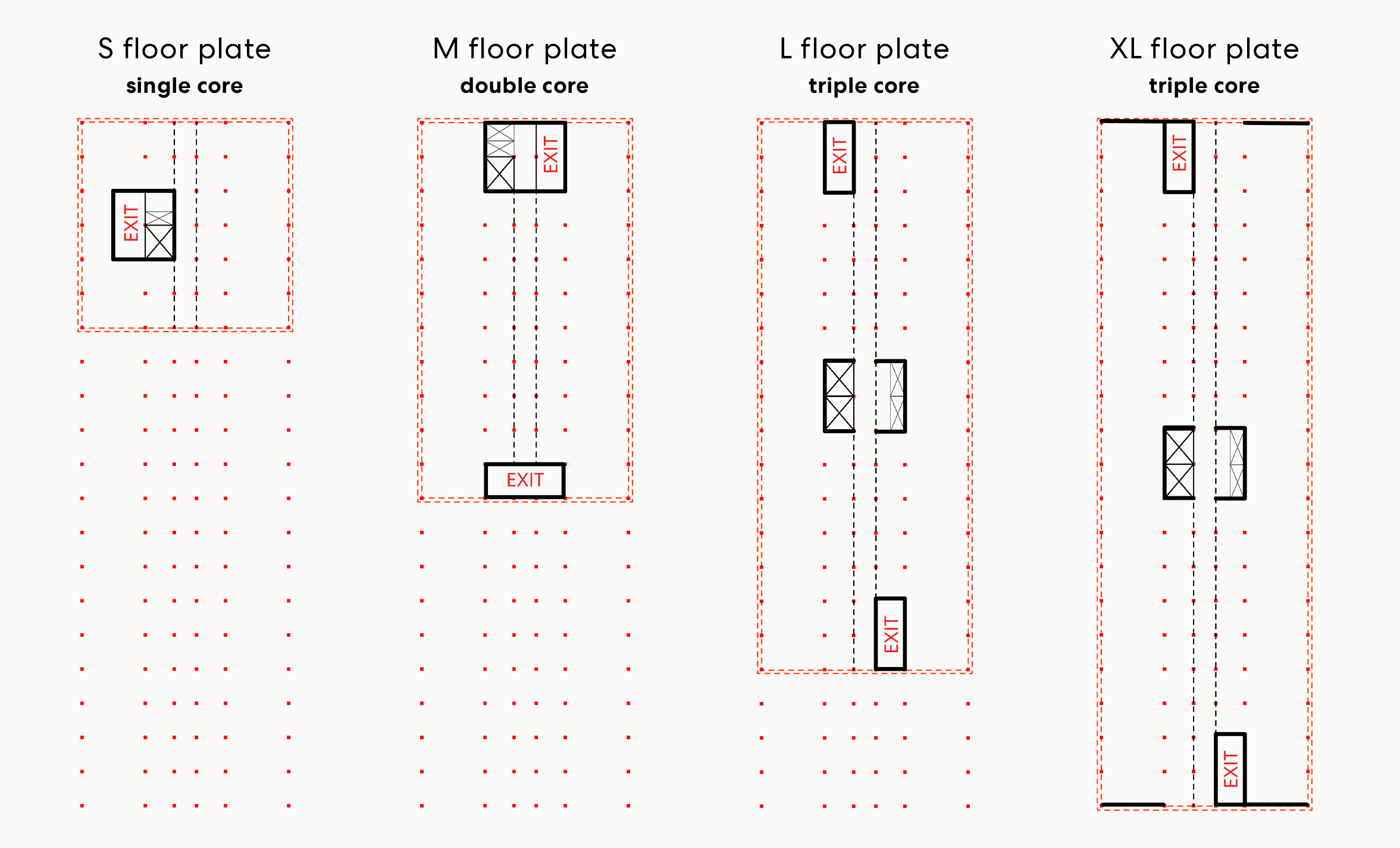
This system is rigorously designed to flex according to your needs. It offers a better way of doing things. Imagine:
What if, instead of designing buildings one by one, developing bespoke solutions and starting from scratch each time, we designed a scalable system?