Modules
Where the system becomes architecture.
Modules translate the underlying grid and component logic into inhabitable space. They define how rooms, units, and floor plates are assembled—enabling variation, livability, and adaptability without sacrificing repeatability or constructability.
Rather than prescribing a fixed set of unit types, the system provides a flexible framework capable of producing a wide range of dwellings using shared spatial and technical logic.
What We Mean by Module
In this system, a module is not a volumetric box or a finished product.
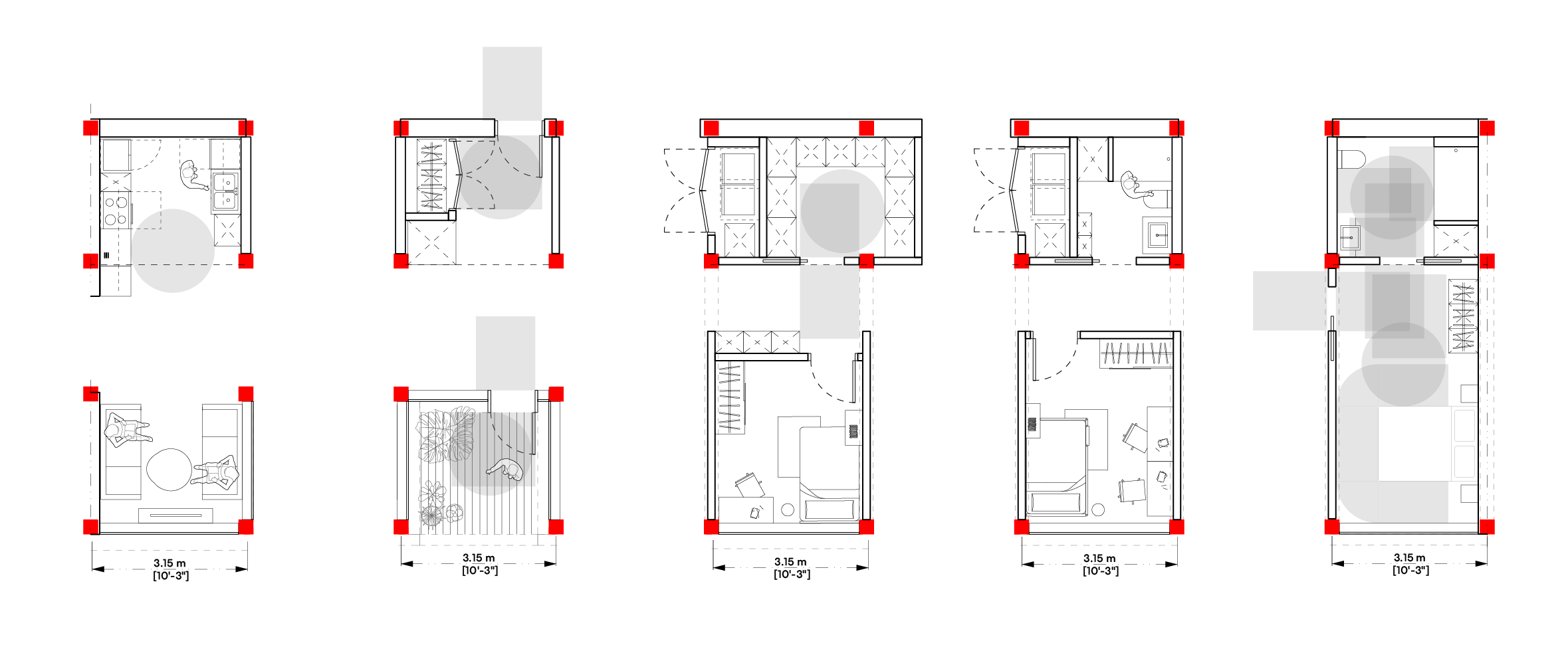
A module is a spatial unit defined by the grid, assembled from standardized components, and coordinated with structure and services.
Modules allow the system to adapt to different building sizes, unit mixes, resident needs and site conditions while maintaining consistency in delivery.
Embedded livability
At the smallest scale, modules define rooms and functional spaces such as living areas, bedrooms, kitchens, and bathrooms.
Key spatial requirements—clearances, accessibility, daylight access, and furniture layouts—are embedded directly into these room-scale modules. By resolving these constraints early, the system avoids bespoke planning while ensuring consistent spatial quality across projects.
The Adaptable Module
A foundational spatial element
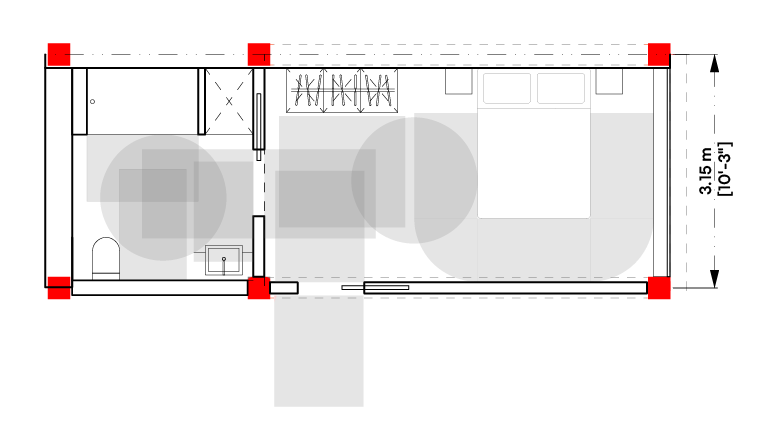
The adaptable module combines a bedroom and bathroom into a single repeatable planning unit sized to meet adaptable dwelling requirements.
Rather than treating accessibility as a special condition, the adaptable block establishes a baseline module that can be deployed across unit types. Clearances, turning radii, and service access are embedded directly into the block, ensuring compliance without bespoke layouts or secondary circulation.
Because the adaptable block sets minimum bay widths and service relationships, it functions as a dimensional driver for the wider system—informing unit layouts, stacking logic, and floorplate organization.
Why this matters
By resolving adaptability at the block level, the system avoids the common trade-off between compliance and efficiency.
Units can scale up or down, combine blocks, or vary in configuration while maintaining consistent clearances and service alignment. Adaptable units are no longer exceptions within the building—they are part of the system logic.
Unit Configurations
A range of dwellings, one system
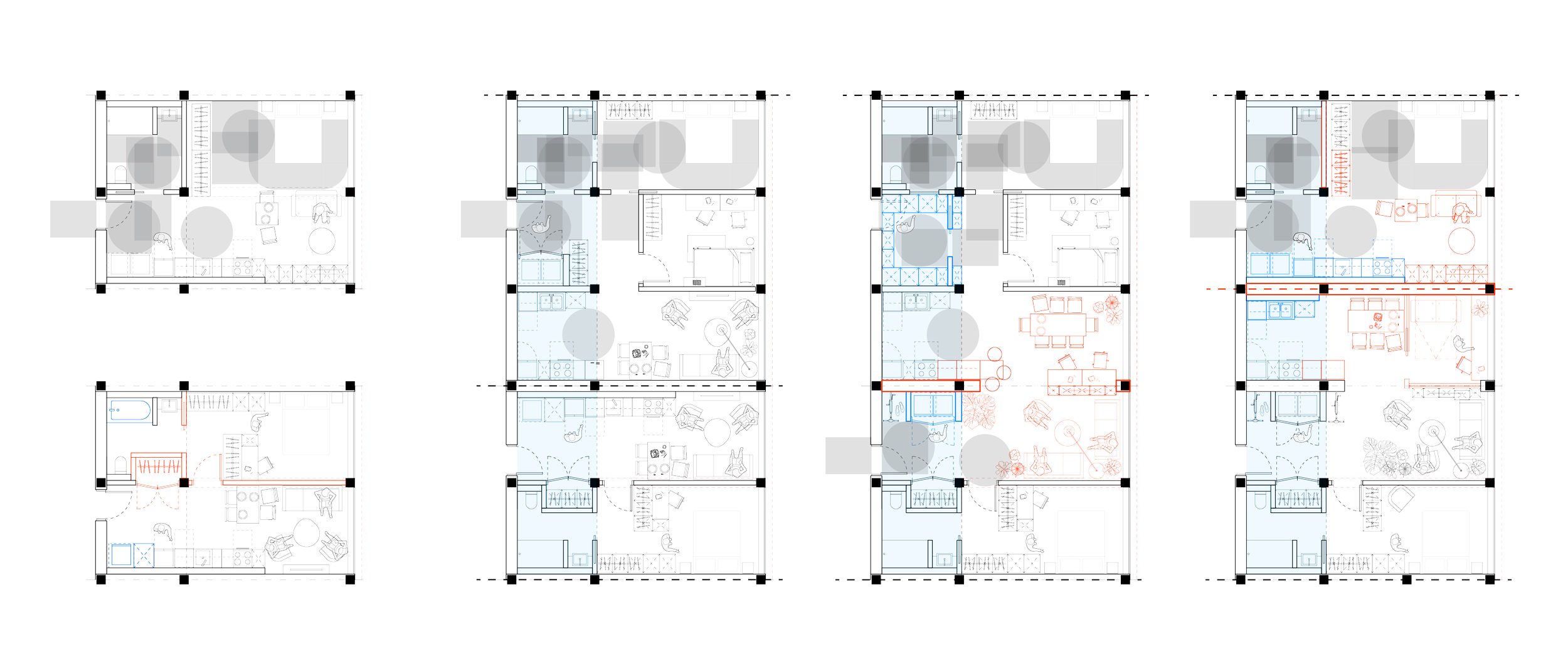
The modular system is capable of producing diverse dwelling types without changing its structural or service framework.
Typical configurations include:
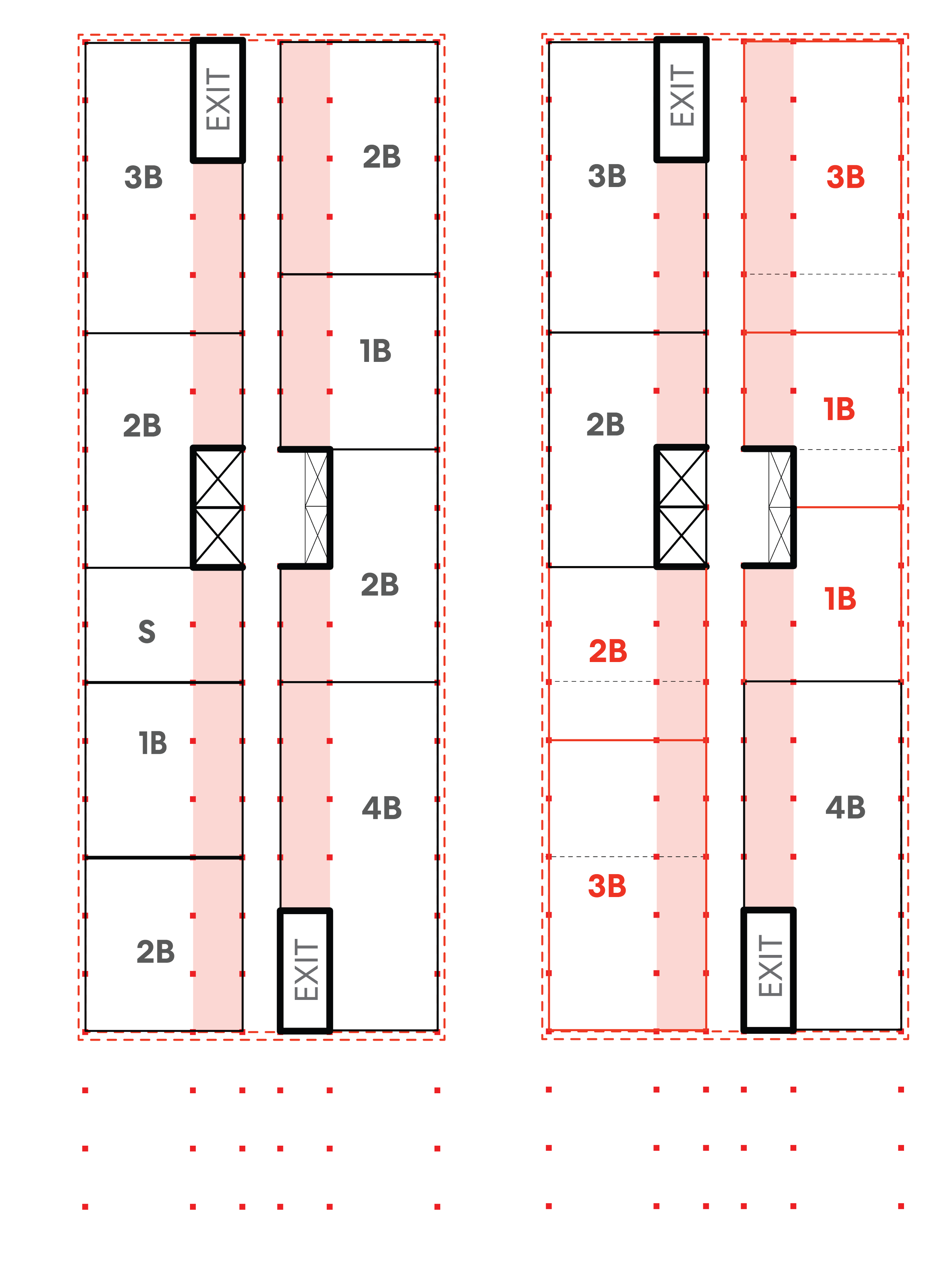
Studios formed from compact bay combinations
One-bedroom units assembled from two to three bays
Two-bedroom units assembled from three to four bays
Family-sized units achieved by extending the same logic across additional bays
Because each bay aligns with the grid and service zones, these unit types can be mixed freely across a floorplate without increasing coordination complexity.
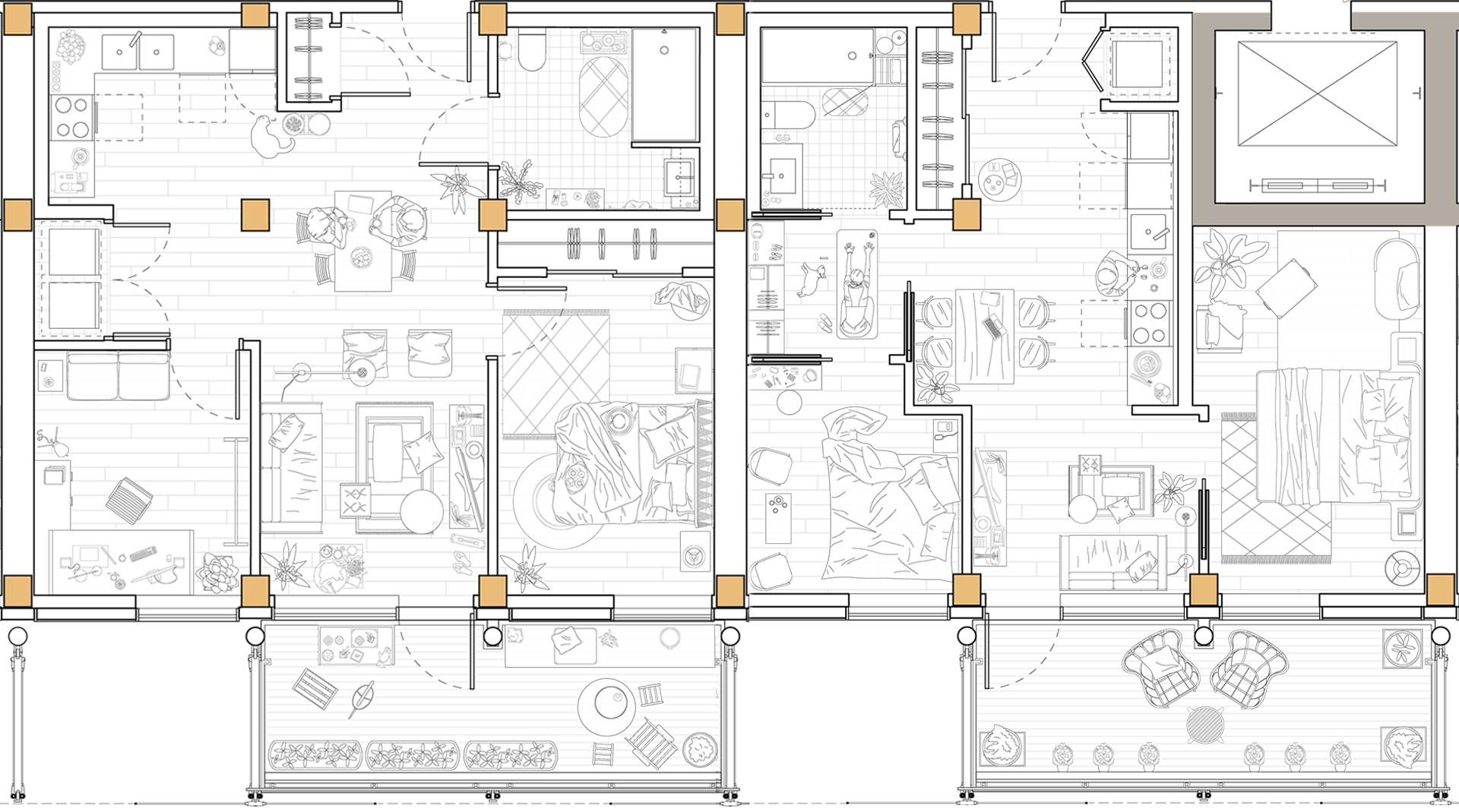
2 Bedroom
2 Bedroom
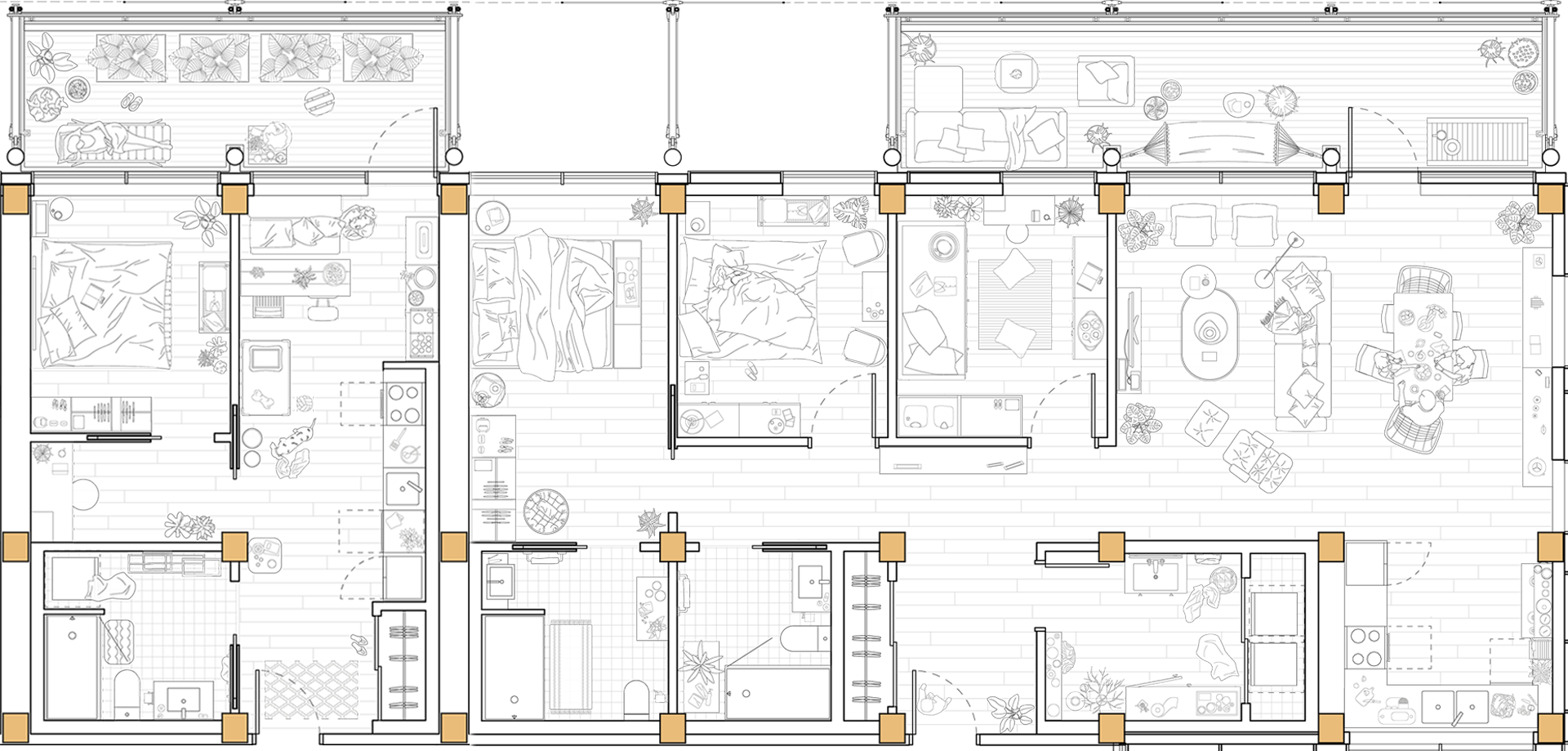
1 Bedroom
3 Bedroom
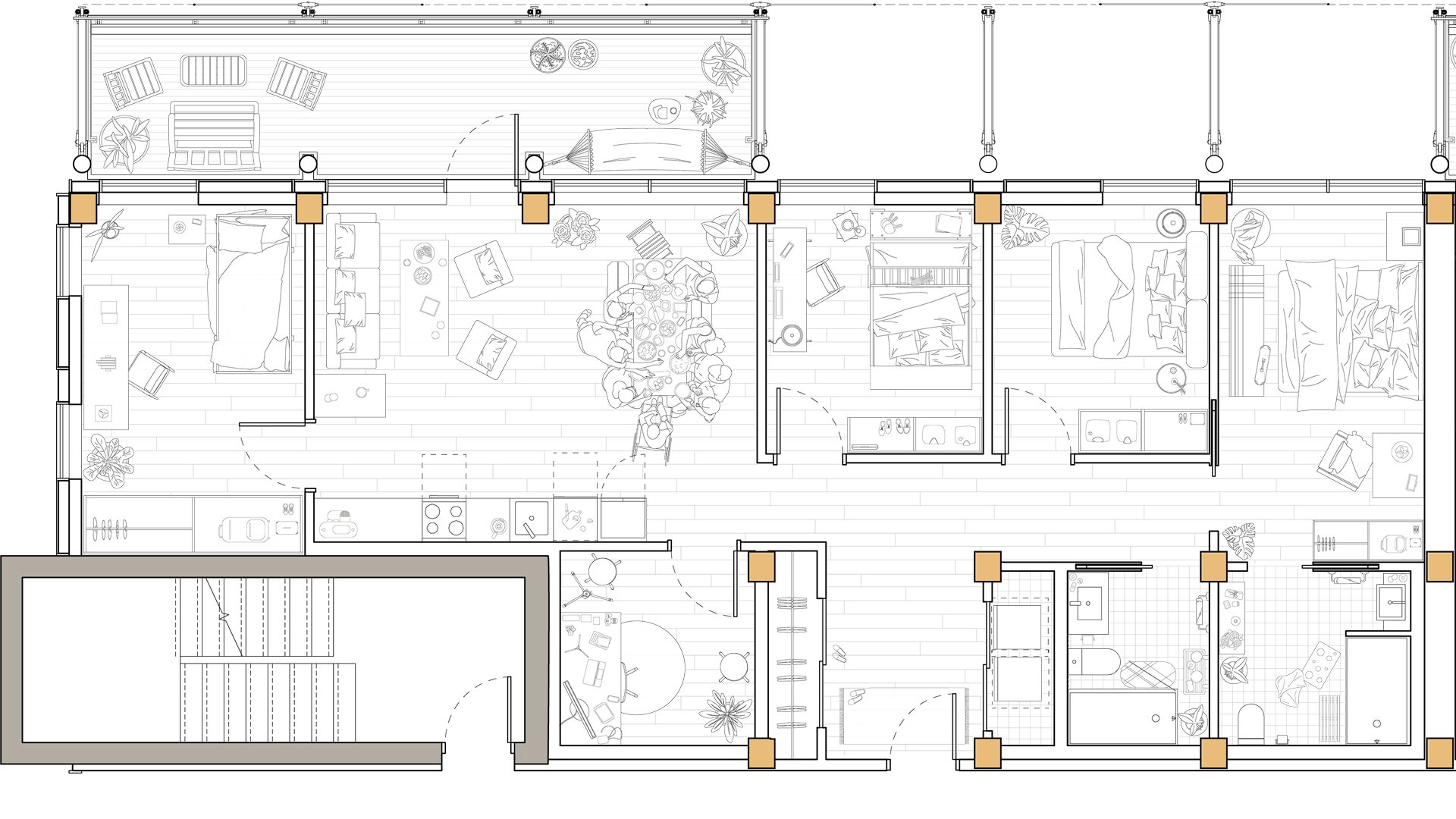
4 Bedroom
Adaptable, evolvable, family oriented
The system is intentionally capable of supporting adaptable and family-oriented housing.
Because circulation, clearances, and service access are embedded in the bay and block logic, larger units can be accommodated without disproportionate loss of efficiency. Units can be reconfigured, combined, or adapted to support accessibility or changing household needs without reworking primary structure or services.
Adaptability is achieved through clarity, not excess.
Housing that Grows with Residents
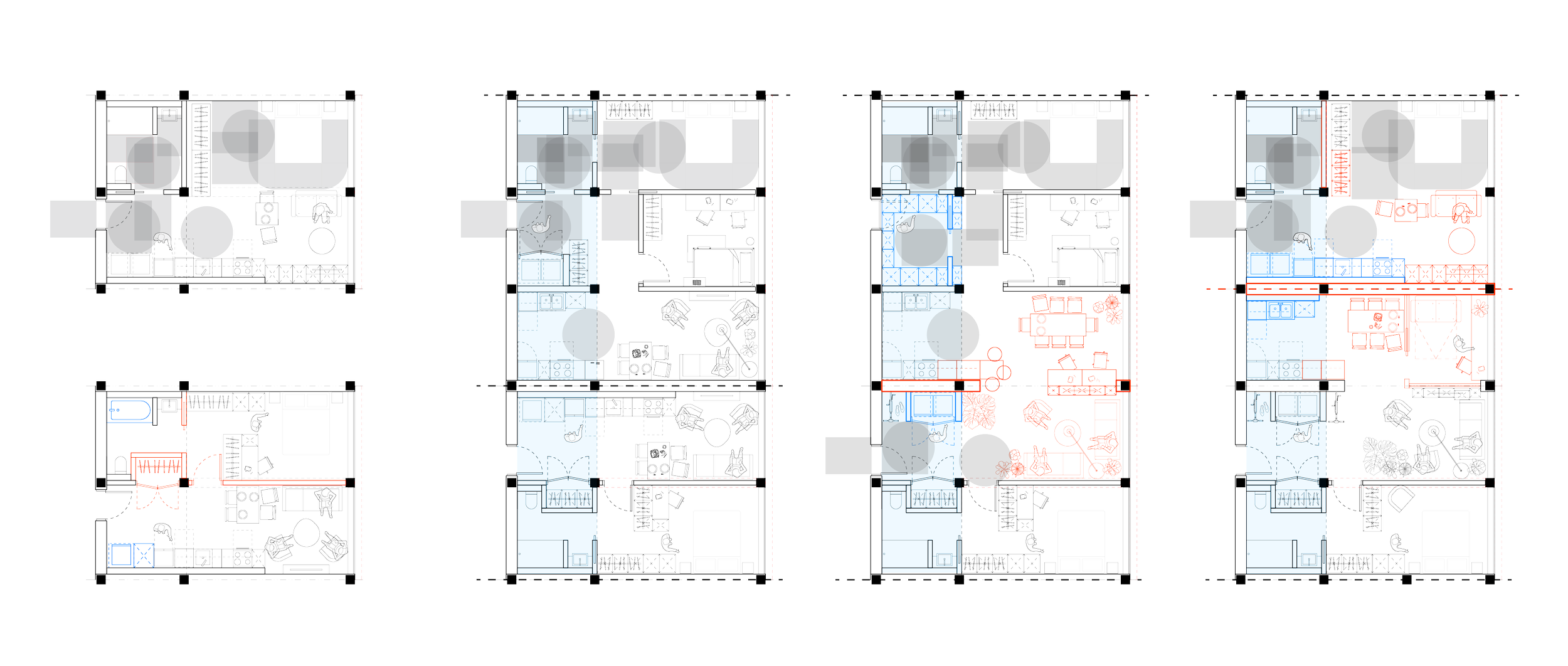
Because modules are defined by relationships rather than fixed forms, the system supports change over time.
Units can be adapted to new uses, combined or subdivided, and upgraded to meet evolving performance or accessibility standards—without disrupting the primary building systems.
This allows housing to respond to long-term needs while maintaining durability and value.
Floor Plates
Scaling up without losing coherence
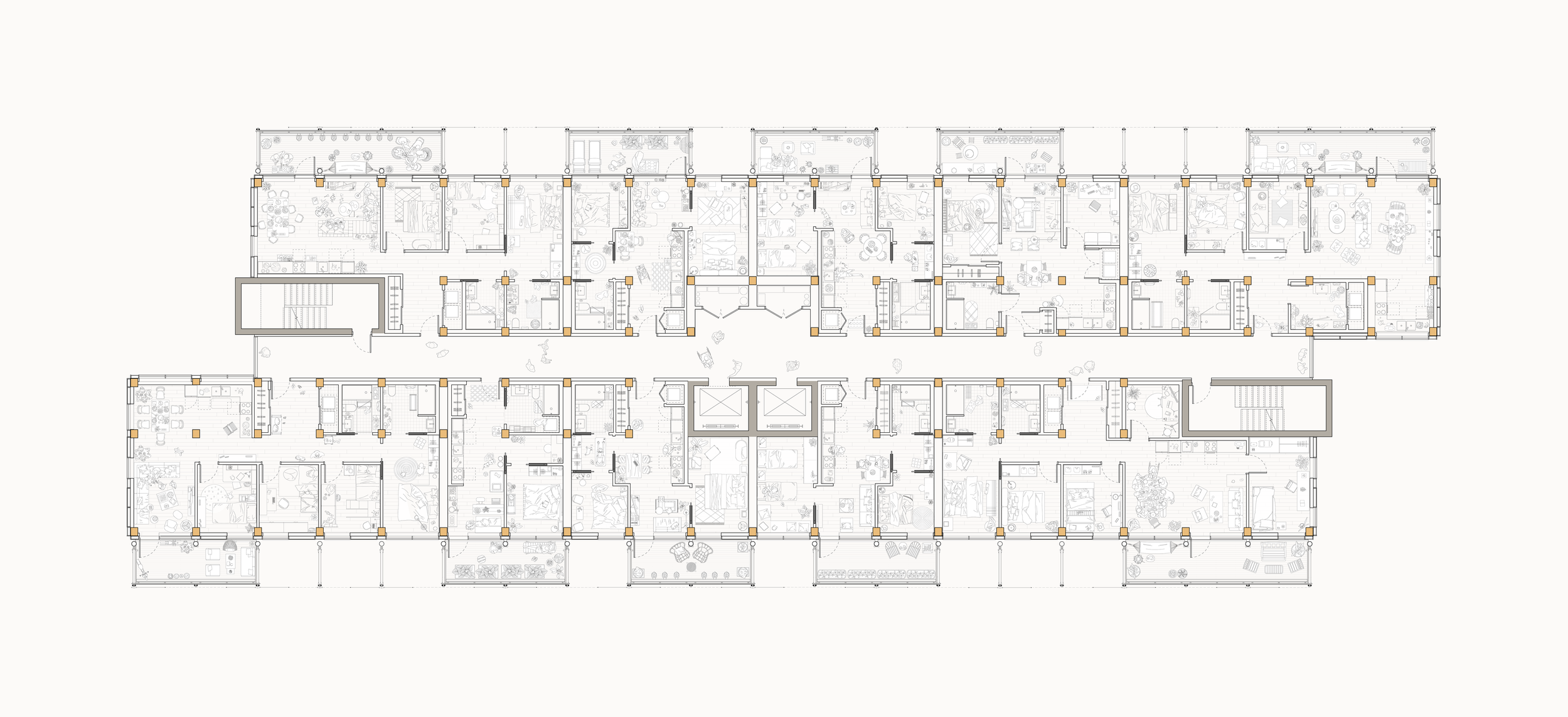
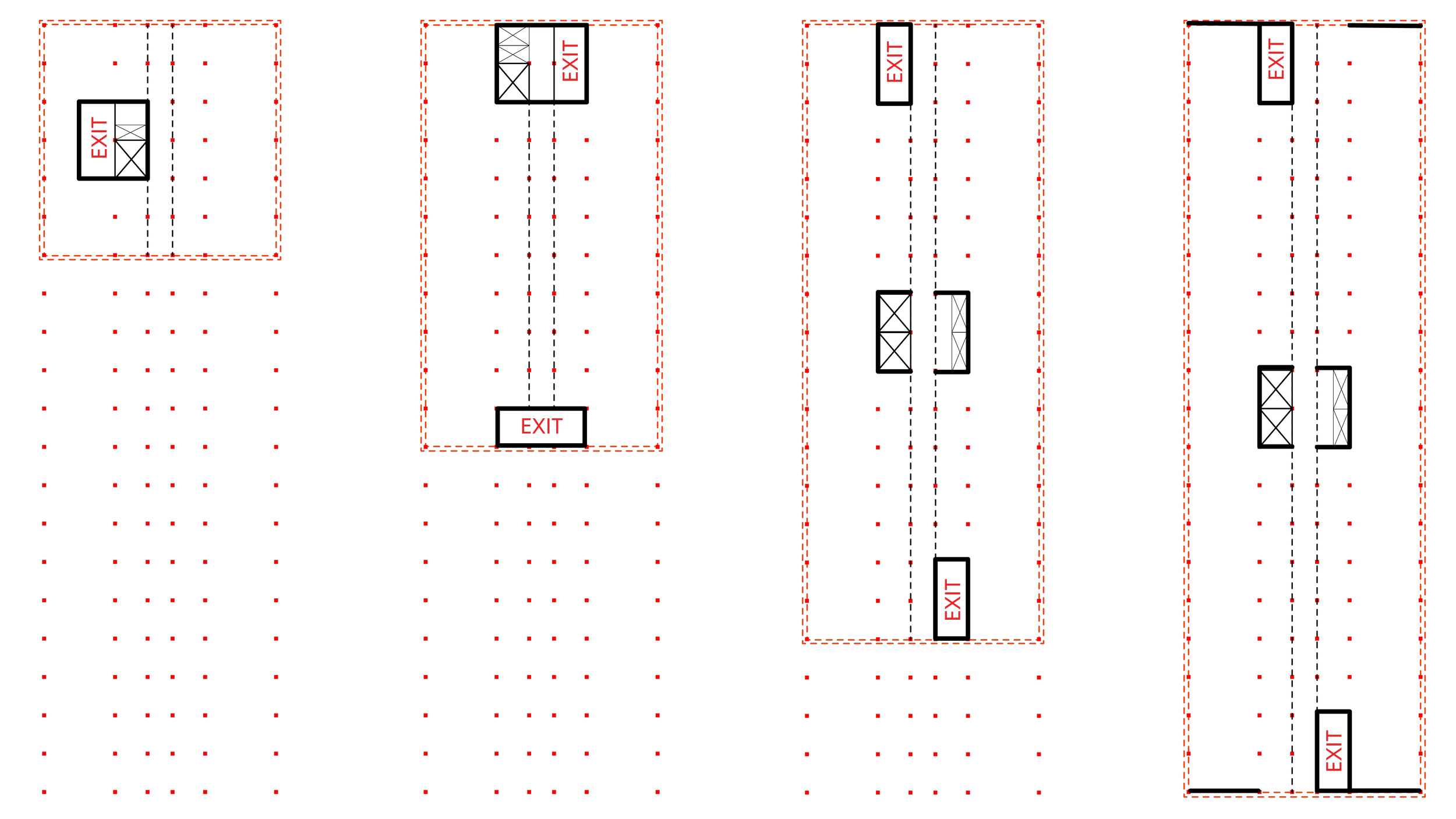
At the building scale, units aggregate into modular floorplates. Shared alignment of structure, services, and unit dimensions allows different unit configurations to coexist on the same level.
This supports:
Flexible unit mixes across projects
Efficient structural layouts
Predictable stacking of units and services
Clear circulation and egress strategies
What this means
Floor plates evolve across projects while retaining a consistent underlying logic.
Variety Through Aggregation
Dwelling units are assembled by combining modules within the governing grid.
Rather than relying on fixed unit typologies, units are defined by bay count and block arrangement.
This approach allows a wide range of unit configurations to be generated using the same underlying logic.